22 February 2015
Products I'm using to "grow" my hair – and empty my bank account
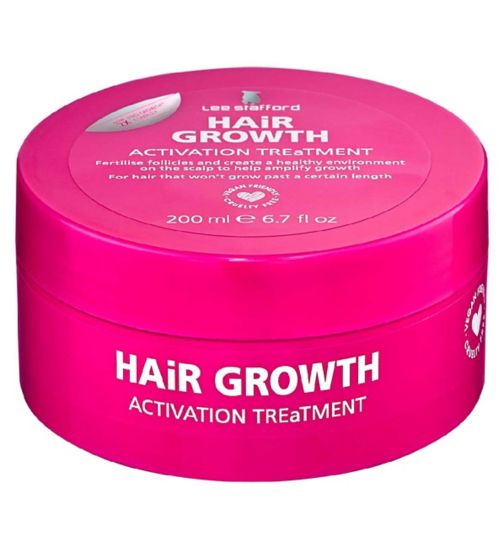
Lee Stafford Hair Growth Treatment/ Tresemme Keratin Smooth Deep Treatment Masque – each time I wash my hair (twice a week)
Tresemme Keratin Smooth Heat Protection Spray – twice a week
Coconut oil – once a week
Holland and Barrett Skin Hair and Nails supplements – Three times a day
Vitamin E supplements – once a day
Estimated total spend: £40
Products that are actually working:
Estimated hair growth after eight weeks: 3/4 inch
20 July 2014
Moving on
Today marks three weeks since I moved away from my University life.
Technically I cheated and moved back into halls for three wonderful days where I got to party with all of my friends, watch them graduate and do some last minute checking off of Reading things I always wanted to do.
The truth is nobody prepares you for what it feels like to leave those three years behind.
I'm in the early stages. Currently, I'm heartbroken.
I've been forcibly removed from some of the greatest people I've ever encountered. Like most, I had more friends and was more popular and found more like-minded people than I'll probably ever have around me again. Now I'm back in my childhood home. With my two happily married parents, my only-slightly younger brother and the girlfriend that he had before I left. Nothing really changes.
Except before I was used to being on my own.
I spent every single day of the last three years in a magical bubble of friends. Now I have to get used to my own company and I tell you what, it sucks.
I guess this is why people go travelling for six months or dive into a job. The sheer discomfort of not having anything to do or to work towards or to achieve is unbearable. After three years (longer if you count all the education before that) of consistently improving oneself in a structured system, being out of that system, having no safety net of education, I feel like I'm free-falling in slow motion, towards absolutely nothing.
It's an overwhelming experience to have to adjust to so much:
I guess it'll get worse before it gets better. I'll be tired at work one day and really have to fight off a fit of tears about how I can't just mong out hungover on a questionable sofa surrounded by half empty bottles, bad tv and best friends.
But I expect (and I really, really hope) that there will be a lot of relapses. A weekend or a birthday here and there that gives us an excuse to relive tequila slammers, long lie-ins and five-way spoons.
What I wanted to be told before I left was that it's going to be so unexpectedly hard to accept that the biggest adventure of my life is over. But I guess my future self would probably tell me that there are more adventures ahead. Until then, I'm taking the days as they come. The good with the bad. Slow and steady. One at a time.
Technically I cheated and moved back into halls for three wonderful days where I got to party with all of my friends, watch them graduate and do some last minute checking off of Reading things I always wanted to do.
The truth is nobody prepares you for what it feels like to leave those three years behind.
I'm in the early stages. Currently, I'm heartbroken.
I've been forcibly removed from some of the greatest people I've ever encountered. Like most, I had more friends and was more popular and found more like-minded people than I'll probably ever have around me again. Now I'm back in my childhood home. With my two happily married parents, my only-slightly younger brother and the girlfriend that he had before I left. Nothing really changes.
Except before I was used to being on my own.
I spent every single day of the last three years in a magical bubble of friends. Now I have to get used to my own company and I tell you what, it sucks.
I guess this is why people go travelling for six months or dive into a job. The sheer discomfort of not having anything to do or to work towards or to achieve is unbearable. After three years (longer if you count all the education before that) of consistently improving oneself in a structured system, being out of that system, having no safety net of education, I feel like I'm free-falling in slow motion, towards absolutely nothing.
It's an overwhelming experience to have to adjust to so much:
- Being back at home for good and trying not to break down over the fact that it's for an indeterminable amount of time.
- Trying to get on with your family - people you wouldn't necessarily pick to live with if you were given the choice.
- Not knowing when you're going to see your friends next. Jobs, money, finding a time when everyone can meet up; all problems.
I'm lucky. I found a job and I start in a week's time. I will have been officially unemployed, officially not a student, for a single month before I begin a career. I'm told it's good. It's healthy to have a break.
I guess it'll get worse before it gets better. I'll be tired at work one day and really have to fight off a fit of tears about how I can't just mong out hungover on a questionable sofa surrounded by half empty bottles, bad tv and best friends.
But I expect (and I really, really hope) that there will be a lot of relapses. A weekend or a birthday here and there that gives us an excuse to relive tequila slammers, long lie-ins and five-way spoons.
What I wanted to be told before I left was that it's going to be so unexpectedly hard to accept that the biggest adventure of my life is over. But I guess my future self would probably tell me that there are more adventures ahead. Until then, I'm taking the days as they come. The good with the bad. Slow and steady. One at a time.
Labels:
career,
employment,
friends,
heartbreak,
home,
job,
leaving,
moving,
personal,
Reading,
university
23 April 2014
The Faults in This Novel
First of all, spoilers.
I am in such deep, fantastical, heartbreaking love with Looking for Alaska. I've never fallen so hard for a book. I was sixteen when I first read it. It was a case of right book, right time. There is no better period in my life that I could have fallen for something.
I read Paper Towns and Will Grayson, Will Grayson and An Abundance of Katherines and never fell as hard. I still carry a lot of admiration for Margo Roth Spiegelman who I'd like to revisit as a feminist and explore just exactly how much of a female enigma she really is.
Two months ago I found the time to really get my teeth into The Fault in Our Stars. I devoured it in two sittings over the course of 48 hours.
It's hard to objectively analyse a text once you're aware of its reputation and enamoured with the author's previous work. It's hard not to let your expectations get in the way of your reading.
With those ideas in mind: my overwhelming feeling is one of disappointment.
It felt like a carbon copy of LfA.
The protagonist is a loner struggling with the social interaction required of teenagers. A character dies (arguably unexpectedly) midway through the narrative. It ends on a letter.
I felt like the parallels are too much. Is this some kind of teen fiction formula? Is it Nicholas Sparks for 11-19 year olds? I just couldn't buy it.
The "okay" thing was cheesy and forced and I didn't like Augustus. I can't make up my mind if he's genuinely supposed to be this strange asshole or actually doesn't work as a character. I liked Alaska. She's destructive but she's so human. Augustus has this dumbass "metaphor" which has been ripped the shit out of by memes across the internet. Either proving its impressive transcendence or that thousands of teenagers didn't feel "okay" about it.
If the selling point of this new work of Green's is a female protagonist then count me out. Making a protagonist female just to sell more books is counterproductive to feminism. Females are not there to sell your novels. I can fit myself into any protagonist. Man, woman, time travelling gender altering Orlando, if a text is written by a human about humans there will be a kind of human connection. The sex of the protagonist does not necessarily determine my desire to read the narrative.
Ultimately, LfA is the better version of this text; why would I want a slightly less believable copy?
And, nothing pissed me off more than the fact that it didn't end in the middle of a
I am in such deep, fantastical, heartbreaking love with Looking for Alaska. I've never fallen so hard for a book. I was sixteen when I first read it. It was a case of right book, right time. There is no better period in my life that I could have fallen for something.
I read Paper Towns and Will Grayson, Will Grayson and An Abundance of Katherines and never fell as hard. I still carry a lot of admiration for Margo Roth Spiegelman who I'd like to revisit as a feminist and explore just exactly how much of a female enigma she really is.
Two months ago I found the time to really get my teeth into The Fault in Our Stars. I devoured it in two sittings over the course of 48 hours.
It's hard to objectively analyse a text once you're aware of its reputation and enamoured with the author's previous work. It's hard not to let your expectations get in the way of your reading.
With those ideas in mind: my overwhelming feeling is one of disappointment.
It felt like a carbon copy of LfA.
The protagonist is a loner struggling with the social interaction required of teenagers. A character dies (arguably unexpectedly) midway through the narrative. It ends on a letter.
I felt like the parallels are too much. Is this some kind of teen fiction formula? Is it Nicholas Sparks for 11-19 year olds? I just couldn't buy it.
The "okay" thing was cheesy and forced and I didn't like Augustus. I can't make up my mind if he's genuinely supposed to be this strange asshole or actually doesn't work as a character. I liked Alaska. She's destructive but she's so human. Augustus has this dumbass "metaphor" which has been ripped the shit out of by memes across the internet. Either proving its impressive transcendence or that thousands of teenagers didn't feel "okay" about it.
If the selling point of this new work of Green's is a female protagonist then count me out. Making a protagonist female just to sell more books is counterproductive to feminism. Females are not there to sell your novels. I can fit myself into any protagonist. Man, woman, time travelling gender altering Orlando, if a text is written by a human about humans there will be a kind of human connection. The sex of the protagonist does not necessarily determine my desire to read the narrative.
Ultimately, LfA is the better version of this text; why would I want a slightly less believable copy?
And, nothing pissed me off more than the fact that it didn't end in the middle of a
04 April 2014
The condition of education
At a very young age I realised I had a much furthered interest in academic study than my parents ever had the opportunity or the desire to pursue.
When I was in primary school, this wasn't an issue; however when I entered secondary school, they very quickly became aware that they were getting out of their depth. They couldn't help me with quadratic equations or tell me the number of electrons in a carbon atom and had no idea who Lenny was or just how much he loved that rabbit.
At the age of 12, I was on my own. There would be no further academic help offered to me at home. Not because they didn't want to of course but because they couldn't. This didn't strike me as strange. People's parents worked and some were smarter than others and some weren't.
When I came to university though, I discovered that people's parents were more academically educated and had even been to university. And not only that but they had an actual vested interest in what their kids studied. My friend studies the same English degree as me and goes home to her both graduated parents and has full conversations, discussions, lengthy, heated arguments about the likes of Brontë and Dickens. How fantastic! To be greeted with enthusiasm and questions and opinions rather than a blank stare, a passing comment and a change of subject.
I don't know how many people educated above their parents feel like their skills aren't appreciated, or worse, felt like their education is perhaps useless, a waste of money and time, when one could be earning money and moving out and "having a life".
In July I will become the first female to graduate on my father's side and the only person to ever go to university, let alone graduate, on my mother's. It's new for them; the opportunities to study are much greater now and the social factors of generation and location mean that this is the first time lots of young people have ventured into further study rather than stretching to a vocational course at college.
Disclaimer: this is not a post slating those who chose not to go into further study. In fact, coming out the other side of university in a few months has given me a fresh, tired perspective that casts a hefty £17,000 debt over my last three years. Maybe I didn't need a degree. Maybe I didn't need to study the Renaissance period or Samuel Beckett or what makes a good preface. I too am weighing up whether it was worth it.
Regardless, it doesn't mean that the potential to further myself academically wasn't there. Perhaps I'm being a brat. I was supported financially to do this. Perhaps, intellectually, I should have realised that I am still on my own.
When I was in primary school, this wasn't an issue; however when I entered secondary school, they very quickly became aware that they were getting out of their depth. They couldn't help me with quadratic equations or tell me the number of electrons in a carbon atom and had no idea who Lenny was or just how much he loved that rabbit.
At the age of 12, I was on my own. There would be no further academic help offered to me at home. Not because they didn't want to of course but because they couldn't. This didn't strike me as strange. People's parents worked and some were smarter than others and some weren't.
When I came to university though, I discovered that people's parents were more academically educated and had even been to university. And not only that but they had an actual vested interest in what their kids studied. My friend studies the same English degree as me and goes home to her both graduated parents and has full conversations, discussions, lengthy, heated arguments about the likes of Brontë and Dickens. How fantastic! To be greeted with enthusiasm and questions and opinions rather than a blank stare, a passing comment and a change of subject.
I don't know how many people educated above their parents feel like their skills aren't appreciated, or worse, felt like their education is perhaps useless, a waste of money and time, when one could be earning money and moving out and "having a life".
In July I will become the first female to graduate on my father's side and the only person to ever go to university, let alone graduate, on my mother's. It's new for them; the opportunities to study are much greater now and the social factors of generation and location mean that this is the first time lots of young people have ventured into further study rather than stretching to a vocational course at college.
Disclaimer: this is not a post slating those who chose not to go into further study. In fact, coming out the other side of university in a few months has given me a fresh, tired perspective that casts a hefty £17,000 debt over my last three years. Maybe I didn't need a degree. Maybe I didn't need to study the Renaissance period or Samuel Beckett or what makes a good preface. I too am weighing up whether it was worth it.
Regardless, it doesn't mean that the potential to further myself academically wasn't there. Perhaps I'm being a brat. I was supported financially to do this. Perhaps, intellectually, I should have realised that I am still on my own.
06 August 2013
A short history of disappointment in English
A short history of tractors in Ukranian: a novel with a short-lived buzz about it. For a quick period it won prizes and it’s cover was everywhere from shops to shelves. And somehow I couldn’t get my hands on it. It was an enigma - the cover art remained imprinted in my mind.
But when I finally smuggled the unattainable novel into my suitcase I realised the cover held an image I'd never actually seen before. The colours were all what I remembered but I'd never before recognised the cartoon image of a headscarf'd female aboard a ploughing tractor. I'd mistaken it for a "cool" postmodernist graphic of colours. This wasn't the only realisation I'd have.
The novel was trash. A chick-lit tale attempting to discuss "real" issues but to afraid to do anything except skim over them with quotes and careful illusions.
The fantastic talent of Marina Lewycka is swamped by petty squabbles between stereotypical female characters who refuse to push boundaries. The links between modern philosophy, the rise of tractor engineering and eastern European politics are brushed off as the rambling outlet of an increasingly senile old man (the anti-climactic ending only reinforces this theory). But these excerpts are the cataclysmic parts of the novel. The sources for the great revolutionary writing I believed I would find within the misleading cover.
Lewycka would have been better off actually writing a short history of tractors in Ukranian. It would have been an insightful and fascinating piece of literature, whether embellished with fiction or not. I was caught between mind-blowing passages of captivating non-fiction and a poor articulation of a second-generation family's issues with ageing non-natives.
Ultimately Lewycka's half-assed attempt at a border crossing, boundary pushing, genre bending novel, left me fully disappointed.
Subscribe to:
Posts (Atom)